
High Density Environments Demand Structured Vehicle Regulation
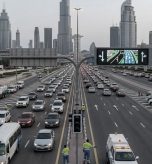
High traffic environments require structured vehicle flow systems to prevent congestion, protect asset integrity and maintain operational continuity. As commercial developments expand, aviation zones increase in passenger volume and public venues attract higher attendance, unmanaged vehicle movement introduces safety risks, access bottlenecks and operational disruption.
Effective mobility systems are not reactive. They are designed in advance, structured around access points and supervised to ensure continuity under peak demand conditions.

Understanding Mobility Complexity
Vehicle flow within high density environments is rarely linear. Multiple access layers, tenant requirements, delivery schedules, emergency corridors and public interface points intersect within limited physical space.
Common operational challenges include:
Without structured regulation, these challenges escalate quickly, impacting tenant satisfaction, safety compliance and asset performance.
Applying Structured Mobility Systems
Designing vehicle flow systems begins with mapping density patterns and access layers within the asset environment. Entry and exit points must be controlled, queue formation must be regulated, and vehicle movement must align with site specific operational requirements.
Structured systems typically include:
The objective is not simply to move vehicles. It is to regulate movement in a way that maintains order, preserves safety and protects operational continuity.

Maintaining Oversight and Accountability
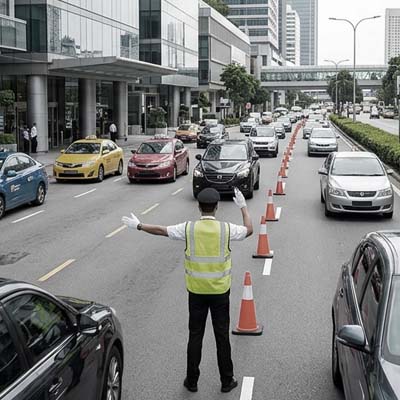
High density mobility systems require supervision. Defined oversight models ensure that traffic control measures are executed consistently and that vehicle handling remains accountable.
Supervised execution includes:
Accountability reduces operational variability and ensures that vehicle interface with the public remains controlled and compliant.
Implementation Considerations
Effective vehicle flow systems must be adaptable. Density patterns fluctuate based on time of day, seasonal demand and event based spikes.
Implementation should account for:
Systems that are rigid or unmonitored fail under peak stress conditions. Structured supervision ensures continuity even when traffic volume increases beyond normal operating thresholds.
Structuring Mobility for Regulated Environments
As asset environments grow in scale and complexity, mobility systems must evolve from informal traffic management to structured vehicle regulation frameworks.
Organizations operating within high density environments benefit from mobility systems that align with asset governance standards, preserve operational continuity and maintain accountable public interface.